Research projects

Practical innovation.

Our projects combine scientific questions with practical application – together with partners from Chemnitz and Saxony, for technology that really helps.

online Orbis Humanica: cultural history on the map

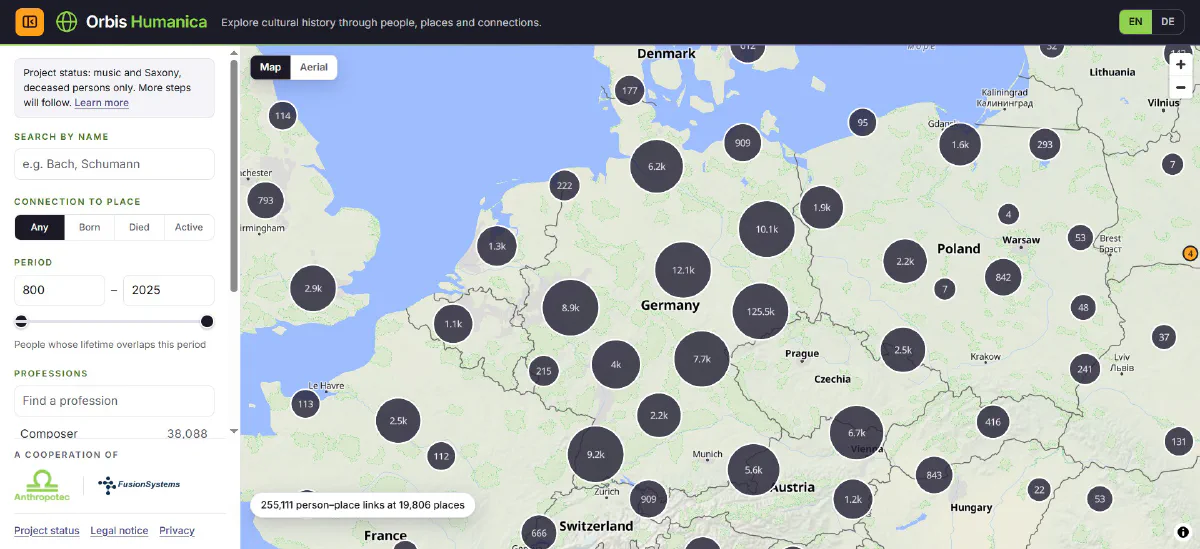
Orbis Humanica: cultural history on the map

Where was a composer born, where did a cantor work, and who lived in the same place at the same time? Orbis Humanica answers such questions on a map. The platform makes accessible the Integrated Authority File (GND) of the German National Library – the register that libraries, archives and museums in the German-speaking world use to name people and places unambiguously.

GNDAuthority dataDigital humanitiesMusic historyOpen data

View project →

ongoing AI-assisted transcription of historical printed works

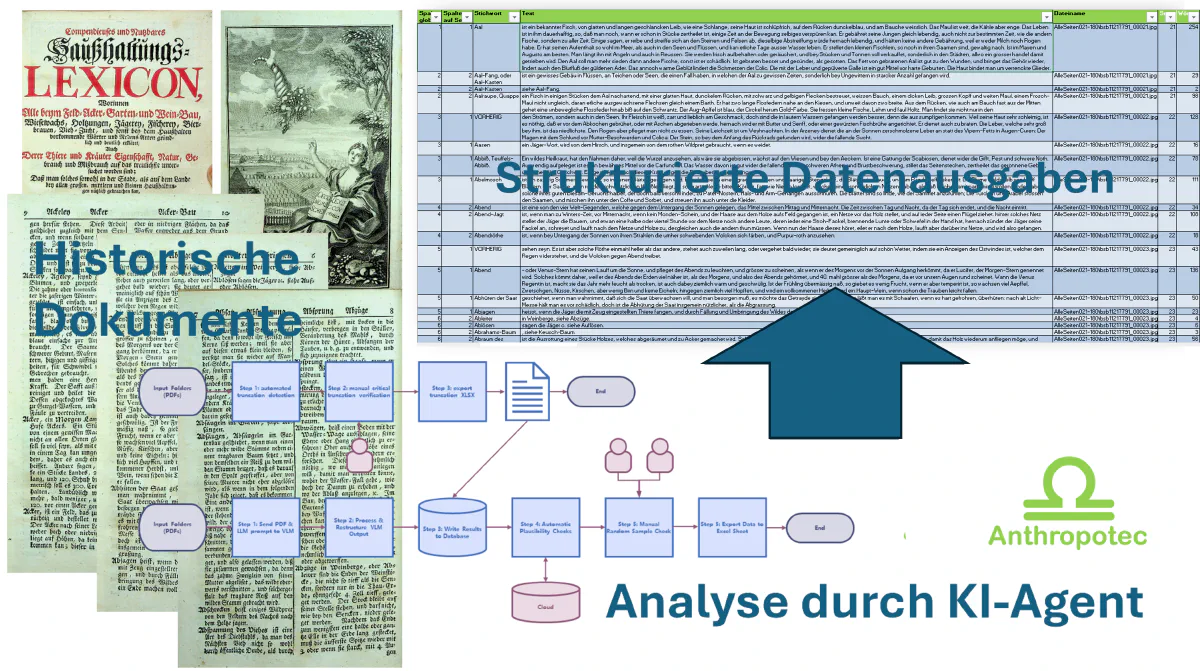
AI-assisted transcription of historical printed works

Historical printed works are a rich source for the history of our region – but set in Fraktur type, densely printed and without modern structure, they are hard for researchers to access. Together with the Chemnitz History Society and FusionSystems, we are testing how large language models and vision language models can read such works, structure them and make them available as searchable data.

LLMVLMHistorical researchData processing

View project →

ongoing Visual feedback in therapy systems

Visual feedback in therapy systems

Movement is key in many therapies – but motivation cannot be prescribed. The MotionComposer turns movement into music, making the joy of movement and self-efficacy tangible. Together with MotionComposer GmbH and FusionSystems, we are investigating how these principles can be transferred to vision: AI-assisted pose recognition generates visual feedback that complements or replaces sound – so that people with hearing impairments can also experience their movement as a response.

Pose recognitionVisual feedbackPerception channelsAccessibilityMotionComposer

View project →

ongoing

AI-based satellite data analysis

The satellites of the European Copernicus programme observe the Earth regularly and in many spectral ranges. This data is freely available – but only suitable methods make it usable for environmental monitoring and agriculture. Together with FusionSystems, we are developing building blocks of an AI pipeline that evaluates multispectral Sentinel-2 data – tested on examples from our region such as the Chemnitz district of Adelsberg.

CopernicusSatellite dataMachine learningEnvironmental monitoring

View project →

Any questions?

Interested in working with us or would you like to learn more about our research? We look forward to hearing from you.

Get in touch →